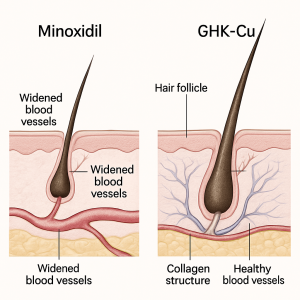
Almost everything solid we know about GHK, and the copper complex it forms, GHK-Cu, comes from cells in a dish rather than people in a clinic
When to increase dose Consider increasing if: Minimal response after 4-6 weeks at current dose No side effects at current dose Current dose below the higher end of recommended range Goals not being met with conservative approach Increase gradually, typically by 25-50% at a time
Copper Peptide Market Analysis Presence Interactive World Map Click countries to explore Regional and Country Analysis North America United States, Canada, Mexico Europe United Kingdom, France, Germany, Italy, Russia, Spain, Sweden, Denmark, Switzerland, Luxembourg, Rest of Europe Asia Pacific China, Japan, South Korea, India, Australia, Singapore, Taiwan, South East Asia, Rest of APAC South America Brazil, Argentina, Colombia, Peru, Chile, Rest of South America Middle East Saudi Arabia, Turkey, UAE, Egypt, Qatar, Rest of Middle East Africa East Africa, West Africa, North Africa, South Africa A = Actual E = Estimated P = Projected Locked values require full access
As we covered earlier in this guide, research suggests that GHK-Cu seems to suffer from some stability issues,9 but ectoine has shown promise as an ingredient that may improve the stability of some peptides.8 Additionally, ectoine is whats known as an extremolyte this is a molecule that can protect cells from extreme stress